
The Technical Side of Digital PR Most Businesses Don’t Understand
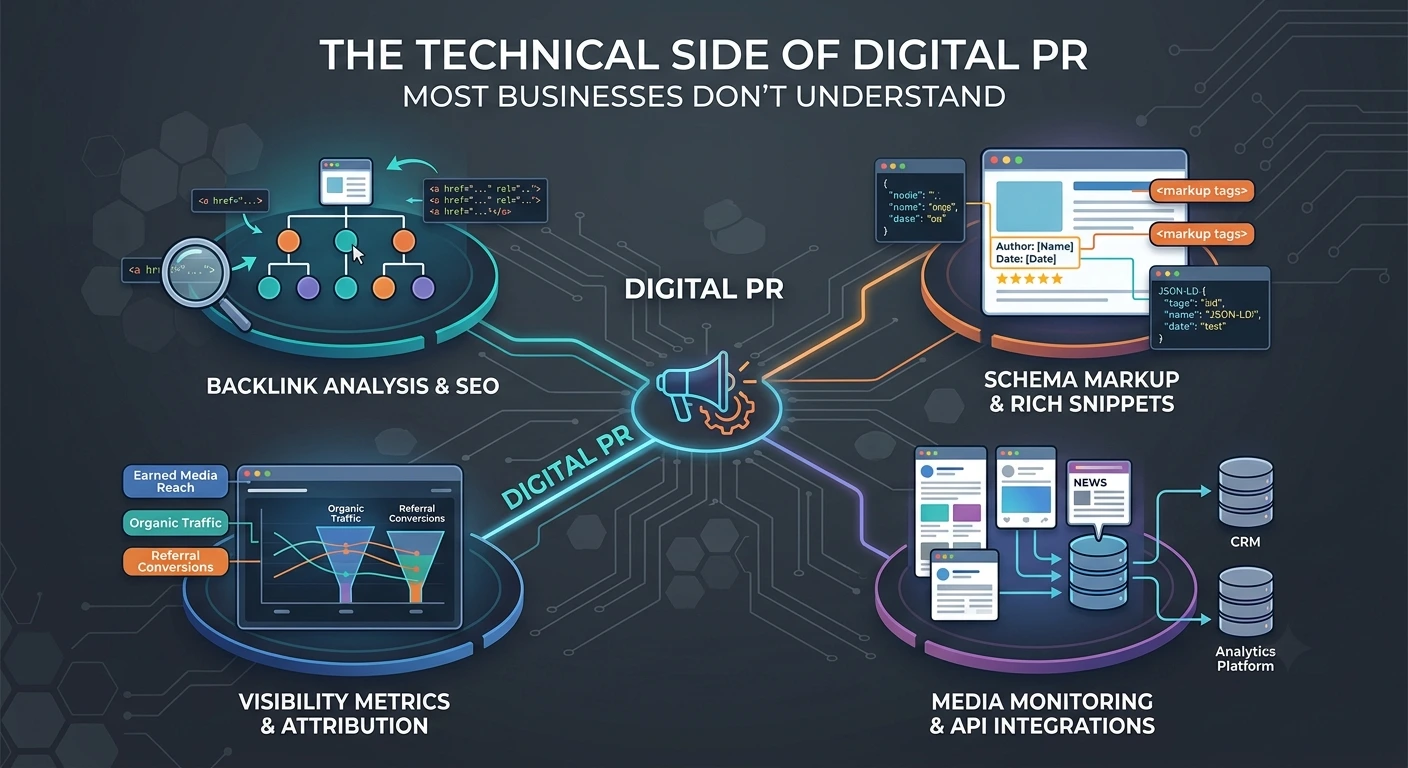
Digital PR is often assumed to be just outreach, media pitching, and obtaining backlinks. Among these, one of the most essential aspects that determines the success of digital PR campaigns is the technical components. Most businesses prioritize creative storytelling but overlook the digital infrastructure that makes their efforts scalable, measurable, and SEO-effective. So if you are still unaware of the technical aspects, keep reading to have a clear understanding of them without getting confused!
What Is Technical Digital PR?
Technical digital PR is an SEO-focused strategy that leverages online tactics such as high-quality content creation, data-driven storytelling, and influencer outreach. The purpose is to earn backlinks, boost domain authority, and increase brand visibility.
Unlike traditional PR, this practice is entirely digital as it aims to improve search rankings and drive web traffic.
In the competitive landscape, businesses that understand and implement technical digital PR gain a competitive advantage as they don’t just earn media coverage; they turn it into measurable growth. This is why they take help from the social media management agency.
The key components of the digital PR practice include:
Link Building And SEO
Involves securing backlinks from high-authority, relevant websites to improve search engine rankings.
Data-Driven Content
Creating compelling and research-backed stories, such as surveys and whitepapers, that journalists want to publish.
Targeted Outreach
Building relationships with online journalists, bloggers, and influencers in specific niches.
News jacking
Aligning brand stories with breaking news or trending topics for immediate relevance.
Influencer Marketing
Making use of influencer marketing techniques to get mentions on accounts with a huge following.
Thought Leadership
Placing expert articles and securing interviews for key stakeholders in top-tier industry publications.
In short, technical digital PR is the process that supports and improves PR campaigns from a data, SEO, and performance perspective. This process combines public relations with technical SEO, analytics, and digital infrastructure.
The goal is not only to get mentions. Instead, digital PR aims to ensure that coverage delivers measurable values like traffic, authority, and conversions as well.
What Are The Technical Efforts Of The Digital PR Strategies?
The key technical elements are:
· Backlink Quality Over Quantity
One of the most common misconceptions is that more backlinks equals better results. The modern digital PR targets high authority and relevant backlinks.
Most of the search engines evaluate links through complex algorithms. However, the use of poor-quality links can harm your SEO performance if they appear spam or irrelevant!
What actually matters:
- Domain authority
- Relevance of the linking site
- Link placement
- Anchor text optimisation
The use of a single high authority backlink is enough. It can easily outperform numerous low-quality links.
· Crawlability And Indexation
Most of the businesses secure sufficient media coverage but fail to get properly indexed by the linked pages. If Google struggles to crawl or index your content, the digital PR efforts often lose long-term SEO value.
The key technical elements for indexing include:
- Proper use of robots.txt
- Generating XML sitemaps
- Using clean URL structures
- Proper use of canonical tags
Working with a online reputation management agency is essential for contributing to long-term SEO authority as well!
· Page Speed And Core Web Vitals
Digital PR often generates traffic spikes. If you have a website that is not technically optimized for speed, your users are more likely to bounce quicker than expected!
The most important metrics in this case are:
- Largest contentful paint for measuring the loading times of the main content
- Interaction to the next paint that assesses how quickly a page responds to user inputs
- Cumulative layout shift that measures if elements move around unexpectedly
The technical fixes should include compressing images, reducing CSS and JavaScript file sizes to decrease loading times, and using explicit sizes for images.
· Tracking And Attribution
Most of the businesses fail to properly track the impact of their earned media, press releases, and brand mentions.
The most essential tools to demonstrate the ROI are Google Analytics, Google Search Console, google search console and UTM parameters.
The technical setup for proper tracking includes using UTM tracking codes, which help in identifying:
- Which audience drove traffic
- The user behavior after clicking
- The conversion rates
· Anchor Text Strategy
Anchor text is the clickable text present in a hyperlink. An effective anchor text strategy in digital PR bridges the gap between earning media coverage and increasing the search engine ranking.
The most common types of anchor texts include
- Branded ( your company name)
- The exact match keyword
- Some of the partial match keywords
- Generic phrases such as “visit this site”
- Naked URLs
Traditional SEO practices aggressively used exact match keywords that often triggered spam penalties. However, the technical best practice is to use a natural mix of these anchor text types to prevent spam and boost keyword rankings.
Structured Data And Schema Markup
Structured data assists search engines in understanding your content. When your content is technically enhanced with the use of a schema, it automatically boosts chances for higher click-through rates and rich results.
The most common types are:
- Article schema
- Organization schema
- FAQ schema
Remember, these practices are essential for availing SEO benefits if you are running a pr agency Dubai
campaign.
· Internal Linking Strategy
Internal linking comprises strategically linking content from earned media placements or within a business’s own content to higher-value pages.
The technical benefits of this practice include distributing authority across lower-ranked pages, better understanding for search engines, and improved user navigation.
Here is how you can strengthen the SEO impact with internal linking:
- Use of relevant keywords in clickable text
- Linking to landing pages that drive conversions
- Implementing breadcrumb navigation to show the site hierarchy
· Redirect Management
Issues such as 404 errors, changed URLs after campaigns, and deleted landing pages can often waste valuable link equity. This process is essential for preserving the SEO value from external mentions, old campaigns, and broken links.
The technical solution for this practice is the use of 301 (permanent) redirects that updates and old campaign page to a new one. This method ensures that all link equity is passed to the new URL.
This ensures that:
- Link value is preserved
- Users land on relevant pages
- SEO rankings are maintained
FAQS
- Can digital PR campaigns work without technical optimization?
Yes! However, the results will be limited. The lack of technical setup can bring you visibility somehow, but you will lose long-term SEO benefits like sustained traffic and keyword growth.
- How do I know if my backlinks are helping my rankings?
To see a difference in your rankings, monitor your keyword positions, referral traffic, and domain authority trends over time. If rankings improve after link acquisition, your backlinks are likely effective!
- How often should I audit links from PR campaigns?
The best practice is to audit monthly or quarterly to identify broken links, lost backlinks, or opportunities to reclaim the link value.
Wrapping Up
The creative side of digital PR often gets all the attention due to the fun and interesting part; however, the technical side is what ensures long-term success. Without proper tracking, optimization, and understanding of the infrastructure, even the best campaigns can fail to deliver real value. So if you want your digital PR campaigns to truly perform, it’s time to go beyond storytelling and start focusing on the technical foundation that powers them!

I am a specialist in content strategy and SEO,I help UK brands communicate with authority and purpose. My blog posts break down the science of engagement, offering readers practical techniques for crafting compelling articles that drive traffic, build trust, and convert casual readers into loyal customers.